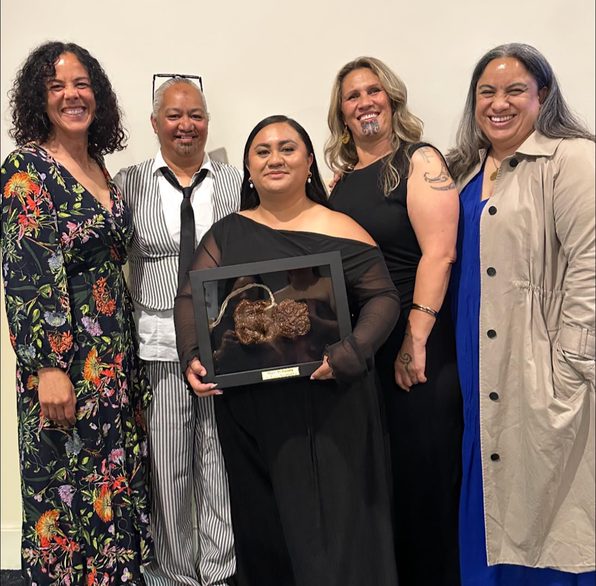
Hāpainga Team won The Te Tohu Mauri Ora award at the National Tobacco Control Summit in Auckland
The Bay of Plenty stop smoking service Hāpainga has been recognised at Te Whakanuia i a Auahi Kore national awards held at the Auckland War Memorial Museum on 13 November 2025.
Hosted by Hāpai Te Hauora Māori Public Health, the event celebrated the people, organisations and initiatives contributing to Aotearoa’s Smokefree goal. Hāpainga received Te Tohu Mauri Ora, a recognition that acknowledges stop smoking providers showing leadership and impact in supporting whānau to become smokefree.
The honour also highlights the contribution these services make to the wellbeing of their communities. The awards evening brought together the tobacco control sector, whānau and hapori to reflect on collective progress and acknowledge the dedication of those working in this kaupapa. The event was part of the National Tobacco Control Summit 2025, where the sector gathered in Tāmaki Makaurau to share research, celebrate decades of advocacy and shape the vision for what comes next beyond the Smokefree 2025 goal.
Lizzie Spence, team leader at Eastern Bay Primary Health Alliance (EBPHA) who established Hāpainga, says the recognition is meaningful. “These are the first awards in nine and a half years, so it is an honour to have our work recognised at this level.”
Emma Walker, Quit Coach at Hāpainga who attended the ceremony, says the recognition reflects the work of many across the sector. “There are so many amazing kaimahi who have worked tirelessly in this smokefree space for so many years. From trailblazers Dame Tariana Turia, Hone Harawira and Shane Kawenata Bradbrook, to all the stop smoking services in New Zealand.”
What is Hāpainga?
Hāpainga is the regional stop smoking service for the Bay of Plenty. It is led by EBPHA, and WBOP PHO supports delivery in the Western Bay. The service is free, mobile and offers practical support, personalised coaching and access to stop smoking tools, including nicotine replacement therapy and carbon monoxide monitoring. People can selfrefer or be referred by general practice and community providers.